September 21, 2026

A stamped concrete patio in southeastern Pennsylvania typically rides out 40 to 50 freeze-thaw cycles between late November and early March, and each cycle puts a little pressure on the surface. Knowing how to maintain your stamped concrete patio in freezing temps comes down to three habits: keeping chloride deicers off it, clearing snow with the right tools, and sealing before the first hard freeze rather than after. Do those well and a quality slab holds its color and texture for 20 years or more.
Concrete is porous, even when it looks dense. Water soaks into the top layer, freezes, and expands roughly 9 percent in volume, which pushes outward against the surrounding paste. When that happens dozens of times per winter, the thin decorative layer that holds your color and pattern starts to let go.
Air-entrained concrete is the built-in defense. Properly mixed exterior slabs in Pennsylvania carry 5 to 7 percent entrained air, which creates microscopic chambers where freezing water can expand without cracking the paste. The Portland Cement Association has documented that air entrainment is the single biggest factor in freeze-thaw durability, which is why a slab poured by a contractor who skipped it will show scaling within two or three winters no matter how carefully you maintain it.
Your maintenance job, then, is simple in principle: limit how much water sits in the surface and avoid anything that accelerates the damage chemically.
This is where most patios get ruined. Rock salt does not dissolve concrete directly, but it drives extra moisture into the pores and increases the number of freeze-thaw cycles the slab experiences, which is how you end up with pitting and flaking by March.
If your slab was poured within the past 12 months, skip deicers completely. Fresh concrete has not finished gaining strength or drying, and one aggressive winter can leave permanent scars. Guidance from University of Minnesota Extension on winter salt use also makes the environmental case: chloride never breaks down, and runoff from driveways and patios ends up in groundwater and local streams.
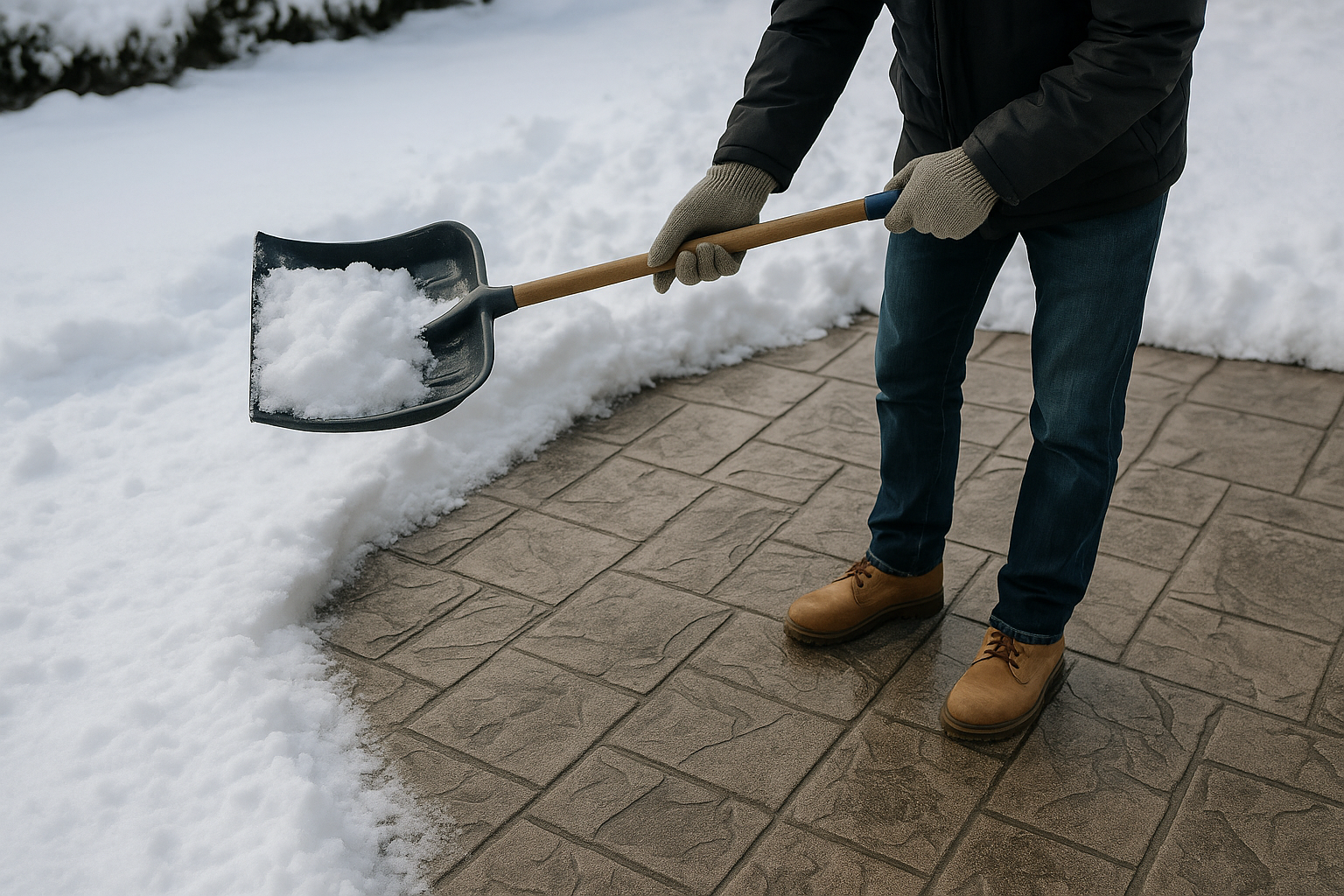
Stamped concrete has raised edges and grout lines, and a steel-bladed shovel catches those edges the way a chisel would. Switch to a poly or plastic blade before the first storm, and keep the shovel flat rather than stabbing at compacted snow.
Patios that sit in shade most of the day, which is common on north-facing lots around Lansdale and Harleysville, hold ice longer than the rest of the yard. Those are the areas worth clearing first.
Sealer is the actual barrier between water and your slab, and it has a shelf life. Most solvent-based acrylic sealers used on stamped work need reapplication every two to three years, and high-traffic areas near steps or grills often need it closer to every two.
Application timing matters as much as the product. You want surface temperatures between 50 and 90 degrees F, dry concrete, and at least 24 hours without rain, which in Montgomery County usually means a window in late September or October. Sealing in December does not work because the product cannot cure, and trapped moisture turns the finish cloudy white.
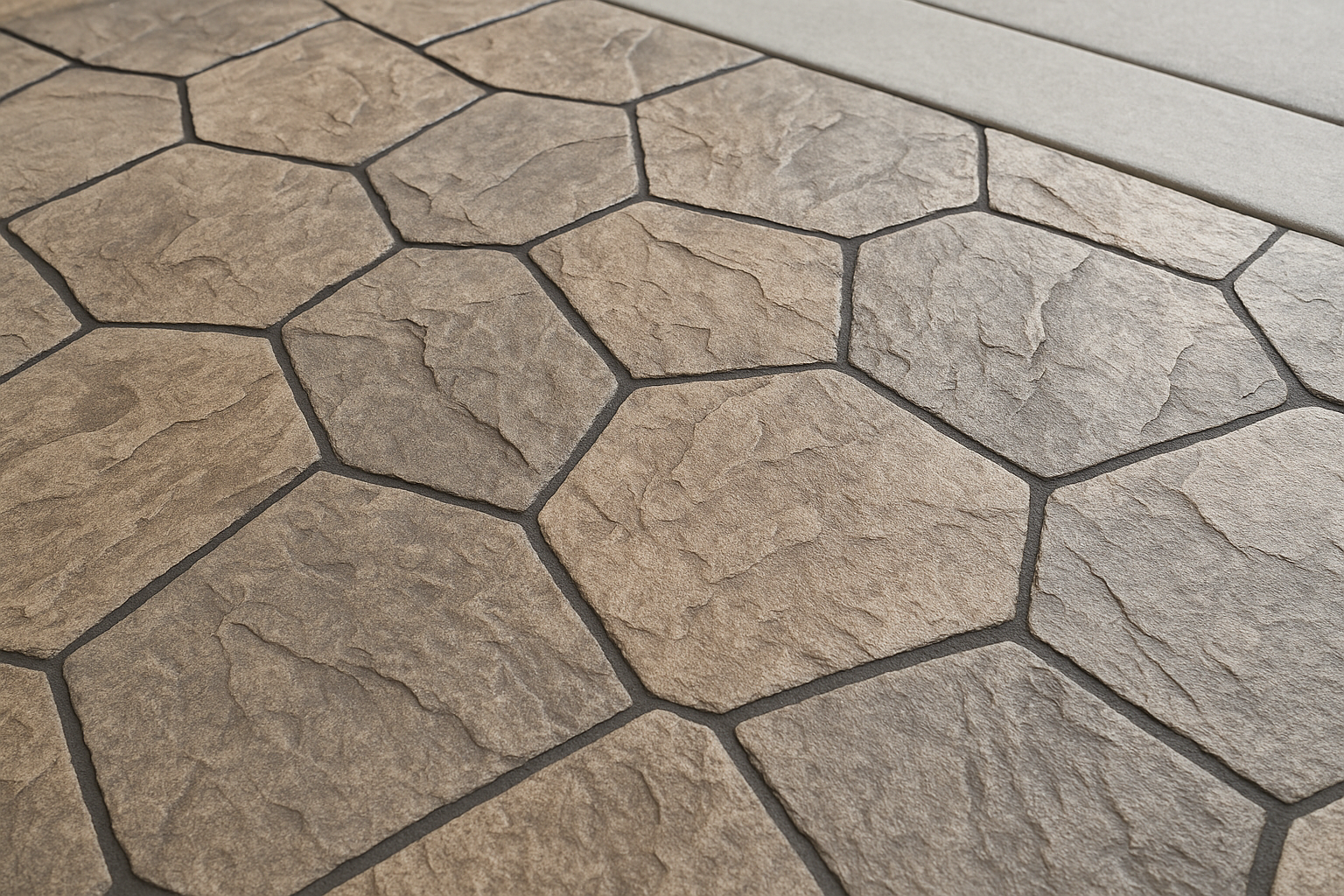
Two thin coats beat one heavy coat every time. A thick application traps moisture under the film, and when that moisture freezes you get blistering and peeling that has to be stripped before it can be fixed. If your patio looks dull and water no longer beads on it, the sealer is spent. Homeowners planning a new installation can see how finish and sealer choices play out in our look at stamped concrete patterns that mimic natural stone, since deeper textures hold more standing water and benefit from a little extra sealer attention.
Half of winter patio damage starts somewhere other than the patio. A clogged gutter that dumps 200 gallons of roof runoff onto one corner of a slab during a January thaw will cause more scaling than a whole season of foot traffic.
A fall cleaning also gives you a chance to inspect. Many homeowners pair it with a professional power washing service in early autumn, which strips off algae and grime so the new sealer coat bonds properly instead of locking dirt under the finish.
That spring walk-through is the one people skip. Small damage caught in April is a patch and a reseal; the same damage ignored for two more winters turns into a resurfacing project.
Not every blemish means trouble. A chalky white film is usually efflorescence, which is mineral salt migrating to the surface, and it typically washes off with a mild acidic cleaner. Real freeze damage looks different.
Surface issues can often be color-matched and resealed. Base movement needs a closer look, and in some cases a section replacement. Teams that handle stamped concrete work in Souderton and stamped concrete installations around Skippack see both every spring, and the difference in cost between the two is significant.
No. Sodium chloride increases the number of freeze-thaw cycles the surface experiences and is the leading cause of scaling on decorative slabs. Use plain sand for traction, or calcium magnesium acetate if you need actual melting down to about 20 degrees F.
Every two to three years for most patios in the Montgomery and Bucks County area. Slabs with heavy sun exposure, frequent foot traffic or regular snow clearing sit at the two-year end of that range. A quick test: splash water on it, and if it soaks in instead of beading, it is time.
Yes, in almost all cases. Acrylic sealers need surface temperatures of at least 50 degrees F for roughly 24 to 48 hours to cure, which southeastern Pennsylvania rarely delivers reliably between December and March. Wait for a stretch of mild, dry weather in April instead.
Dry snow sitting on a well-sealed slab for a few days is largely harmless. The risk comes from melt and refreeze, so a six-inch pile that thaws each afternoon and freezes each night is worse than the same snow in steady cold. Clearing within 24 hours keeps that cycle short.
Typically 20 to 30 years when it was poured at 4,000 psi with 5 to 7 percent air entrainment and resealed on schedule. Poorly air-entrained concrete or a slab treated with rock salt every winter can show meaningful deterioration in as little as five years.
For enclosed or covered areas that never see freeze-thaw, coatings behave very differently, and the comparison in our breakdown of epoxy garage floors versus stamped concrete covers where each one performs best. Outdoors in Pennsylvania, sealed stamped concrete remains the more durable choice.
Wolfpack Home Services seals, repairs and installs stamped concrete across Montgomery and Bucks County, including decorative concrete work in Montgomeryville. Call for a walk-through of your patio and a straight answer on whether it needs a reseal, a spot repair or nothing at all this year.
From patios to footers, I’m here to handle your concrete needs right.
