September 25, 2026
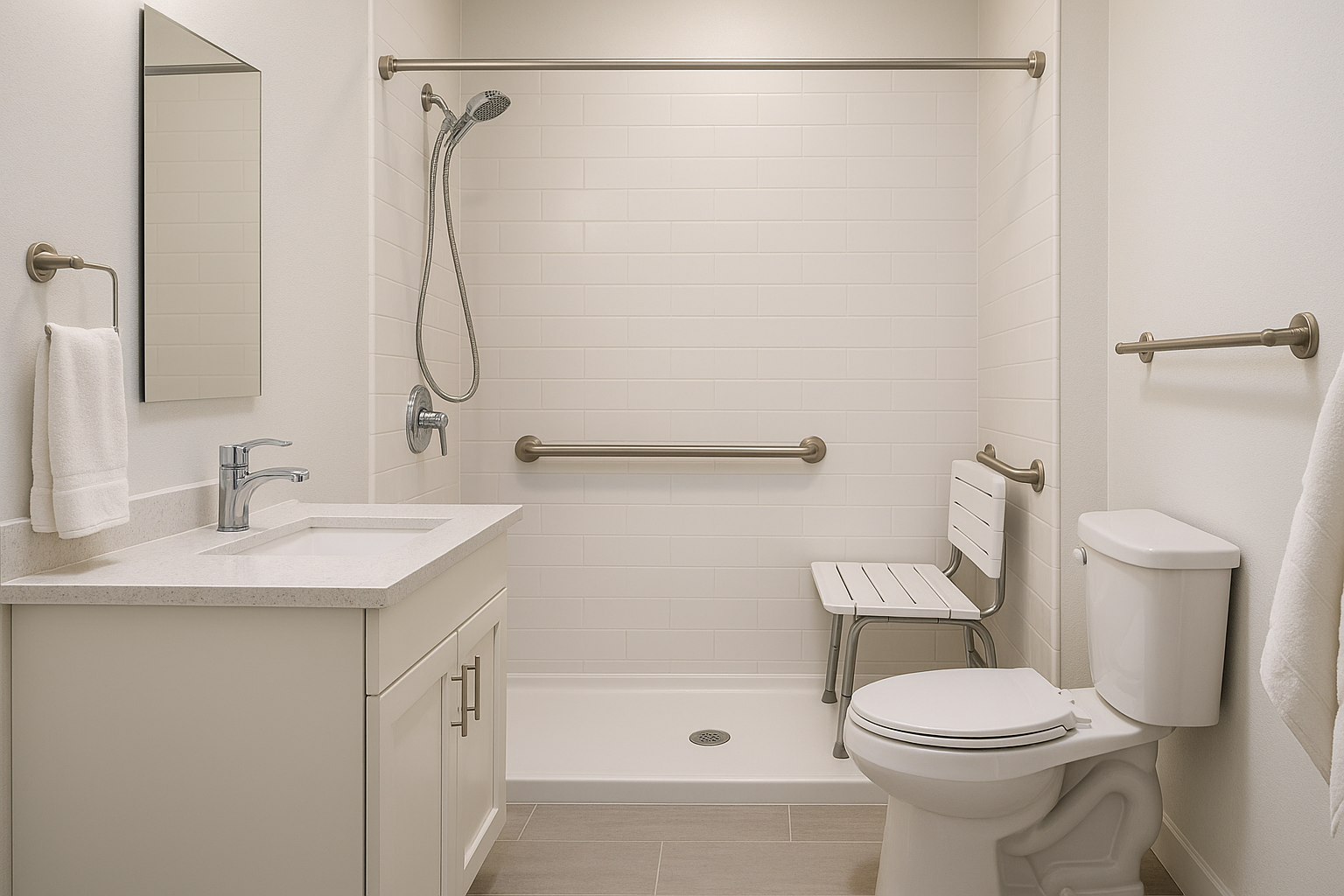
About one in four adults over 65 falls each year, and the bathroom is where a surprising share of those falls happen, according to the CDC’s injury data. The safety upgrades that matter most in an aging-in-place bathroom remodel are the structural ones: blocking behind grab bars, a shower you can walk into without lifting a foot, flooring with a real slip rating, and water that cannot scald. Everything else is comfort.
Below is how those pieces fit together, roughly what they cost in southeastern Pennsylvania, and which ones are worth doing now versus later.
A properly installed grab bar has to hold a 250-pound point load in any direction, which is the threshold written into the 2010 ADA Standards for Accessible Design. Toggle bolts into half-inch drywall do not get you there reliably, and suction-cup bars are a convenience product, not a safety device.
The right approach is 2×8 or 2×10 blocking screwed between studs while the walls are open. If you are already gutting the bathroom, adding blocking across every wall costs maybe $200 to $400 in lumber and labor, and it gives you the freedom to move or add bars years later without opening drywall again.
Placement matters as much as strength. Three locations do the heavy lifting:
Finishes have come a long way. Brushed nickel and matte black bars with knurled grip sections look like towel bars until you need them, which removes the clinical feel that keeps people from installing them in the first place.
The standard tub wall is 15 to 18 inches tall, and lifting a leg over it while balancing on a wet surface is the single riskiest movement in most bathrooms. A curbless or low-threshold shower removes that motion entirely, which is why it tends to be the first thing an occupational therapist recommends.
Converting a tub alcove to a curbless shower usually means recessing the subfloor between joists, installing a linear drain along one wall, and sloping the pan at a quarter inch per foot toward it. In a typical Montgomery County home with wood framing, that work runs roughly $9,000 to $20,000 depending on tile selection and whether plumbing has to move.
A few details separate a shower that works at 80 from one that merely looks accessible:
Glass panels are better than hinged doors here. A fixed panel with a wide walk-in gap means nothing swings into a walker, and there is no bottom track to catch a foot.
Slip resistance is measurable. Under ANSI A137.1, tile intended for wet interior floors should carry a dynamic coefficient of friction (DCOF) of 0.42 or higher, and reputable manufacturers publish that number on the spec sheet. Asking for it is the fastest way to filter out pretty tile that turns into an ice rink when soapy.
Smaller tile formats help for a second reason. Two-inch mosaic on a shower floor puts grout lines every couple of inches, and those joints add grip while letting the pan slope properly toward the drain. Large-format porcelain is fine outside the wet zone as long as the DCOF holds up.
Luxury vinyl plank is a reasonable alternative in the main bathroom floor area. It is warmer underfoot, more forgiving in a fall, and sheet versions can be heat-welded at the seams for a waterproof surface that handles the occasional overflow.
Skin thins with age, and burns happen faster at lower temperatures. Water at 140 degrees can scald an older adult in under three seconds, while 120 degrees takes several minutes. Setting the water heater to 120 degrees is the easy half of the fix.
The other half is a thermostatic mixing valve at the fixture, built to the ASSE 1016 standard, which holds outlet temperature steady even when a toilet flushes or the washing machine fills. Many Pennsylvania homes built before the mid-1990s still have old two-handle valves with no pressure balancing at all, and replacing one during a remodel typically adds $300 to $700 including the trim kit.
Lever handles beat round knobs across the board. Arthritic hands can operate a lever with a forearm or closed fist, and the same logic applies to faucets, where a single-lever or touchless model removes the need to grip and twist.
A 75-year-old eye needs roughly two to three times the light a 25-year-old eye needs to see the same detail, and glare hurts more as lenses cloud. Most bathrooms are lit by one overhead fixture, which creates exactly the shadowed edges that make a step or threshold hard to read.
Layer the light instead. A recessed fixture over the shower, sconces mounted at eye level flanking the mirror, and a motion-activated toe-kick light under the vanity cover the three tasks people actually perform. Aim for 3000K to 3500K color temperature, which renders skin tones accurately without the blue cast of cooler bulbs.
Color contrast does quiet work too. A toilet seat, grab bar or vanity edge that contrasts with the wall behind it is far easier to locate for someone with reduced depth perception, and paint is the cheapest way to create that contrast. Our team of painters serving Hatfield and the surrounding townships often handles that step after the tile work wraps up.
Comfort-height toilets measure 17 to 19 inches to the seat top, roughly two inches higher than a standard bowl, which cuts the distance a weakening knee has to lower and lift. Expect $450 to $900 installed, and consider a model with a bidet seat, since washing and drying functions reduce the twisting that causes a lot of bathroom falls.
Doorways are the other common bottleneck. A 32-inch clear opening is the accessible minimum, and swapping standard hinges for offset swing-clear hinges buys about two extra inches without touching the framing. Replacing a 28-inch door with a 36-inch door, including header work and patching, generally runs $900 to $2,000.
Inside the room, plan for a 60-inch turning circle, or at minimum a 30-by-48-inch clear floor space in front of the sink and toilet. Wall-hung or open-front vanities create knee clearance for seated use and make the room feel larger, which matters in the compact bathrooms common in 1950s and 1960s Montgomery County ranchers.
A full aging-in-place bathroom remodel in Bucks and Montgomery counties generally lands between $18,000 and $40,000, with curbless shower construction and any structural changes driving most of the spread. Homeowners who are not ready for a gut renovation can still get meaningful protection for under $2,500 by combining blocked-and-mounted grab bars, a comfort-height toilet, a handheld shower and improved lighting.
Sequencing helps the budget. If a roof, siding or bathroom project are all on the horizon, mapping them out the way we describe in our step-by-step renovation planning guide prevents paying twice for the same demolition or permits.
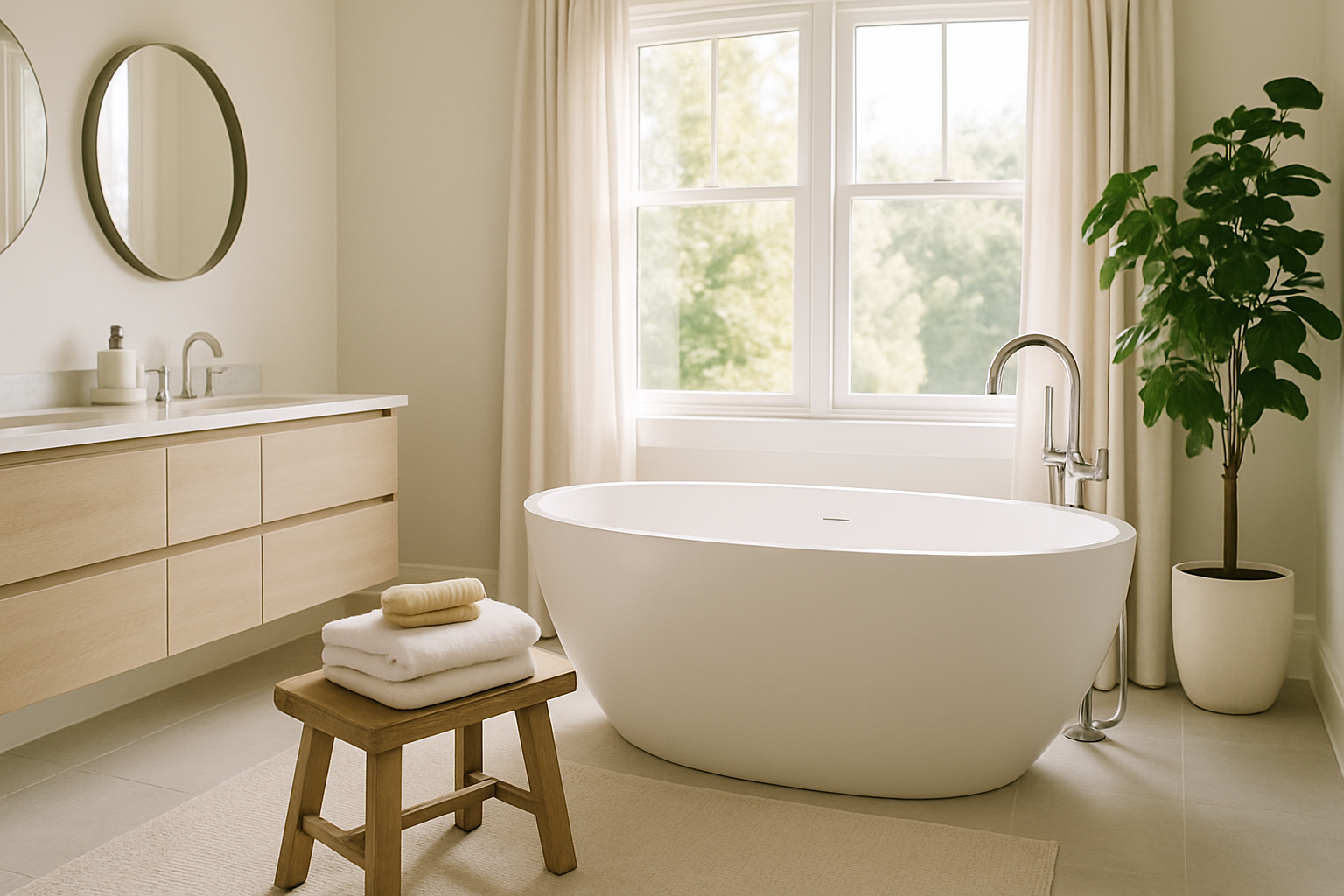
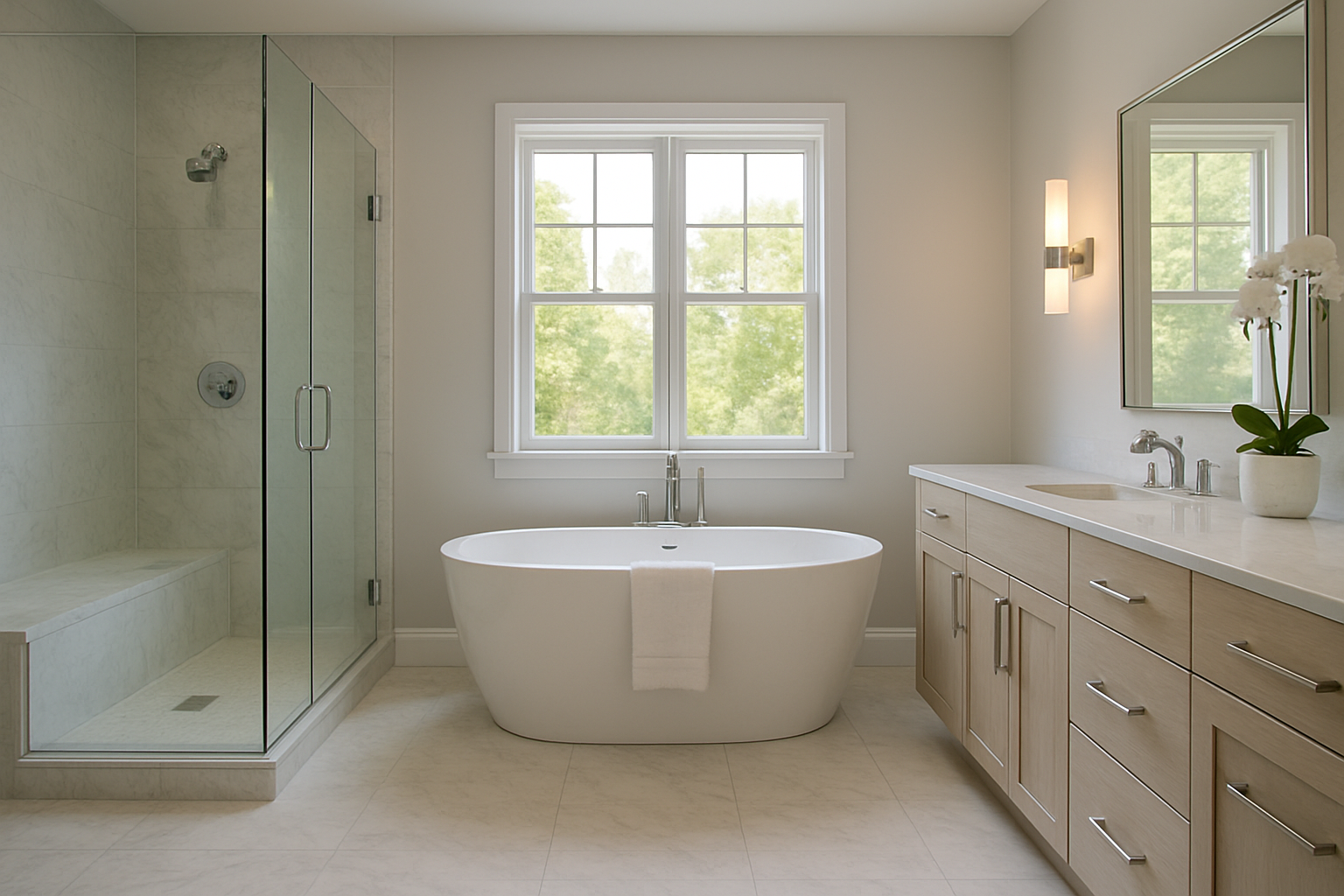
Design-wise, accessibility and comfort are not opposites. Many of the elements in a spa-style master bathroom, including benches, handhelds, heated floors and curbless entries, are the same features that keep a bathroom usable for decades. If you also manage a church, office or rental property, the rules for ADA-compliant commercial bathrooms in Pennsylvania are stricter and worth reviewing separately.
A compliant grab bar must withstand a 250-pound point load applied in any direction, per ADA Standard 609.8. Reaching that figure requires anchoring into studs or solid wood blocking; drywall toggles and adhesive-mounted bars will not hold under a sudden fall.
Original Medicare does not cover grab bars, walk-in tubs or shower remodels, since they are classified as home modifications rather than durable medical equipment. Some Medicare Advantage plans, VA grants such as HISA, and Pennsylvania county aging offices offer partial funding, so it is worth asking before you pay out of pocket.
For most people a curbless shower is the better investment, because walk-in tubs require sitting through the fill and drain cycle while wet and exposed, often five to fifteen minutes total. Walk-in tubs make more sense when soaking provides genuine therapeutic benefit and the user can tolerate that wait.
Plan on three to five weeks of active work for a full bathroom, plus two to four weeks beforehand for design, material selection and permitting. Curbless shower conversions add time because recessing the subfloor sometimes uncovers framing or plumbing that has to be corrected first.
Done well, they help. Wider doors, better lighting, comfort-height fixtures and walk-in showers read as modern design to younger buyers, and with roughly 10,000 Americans turning 65 every day, the pool of buyers who actively want these features keeps growing.
Wolfpack Home Services handles bathroom renovations across Montgomery and Bucks counties, from single grab bar installations with proper blocking to full curbless shower conversions. Call or request an estimate and we will walk the space with you, flag the highest-risk spots, and price the work in phases if that suits your timeline better.

From kitchens to roofs, I manage projects that transform your home.
