October 5, 2026
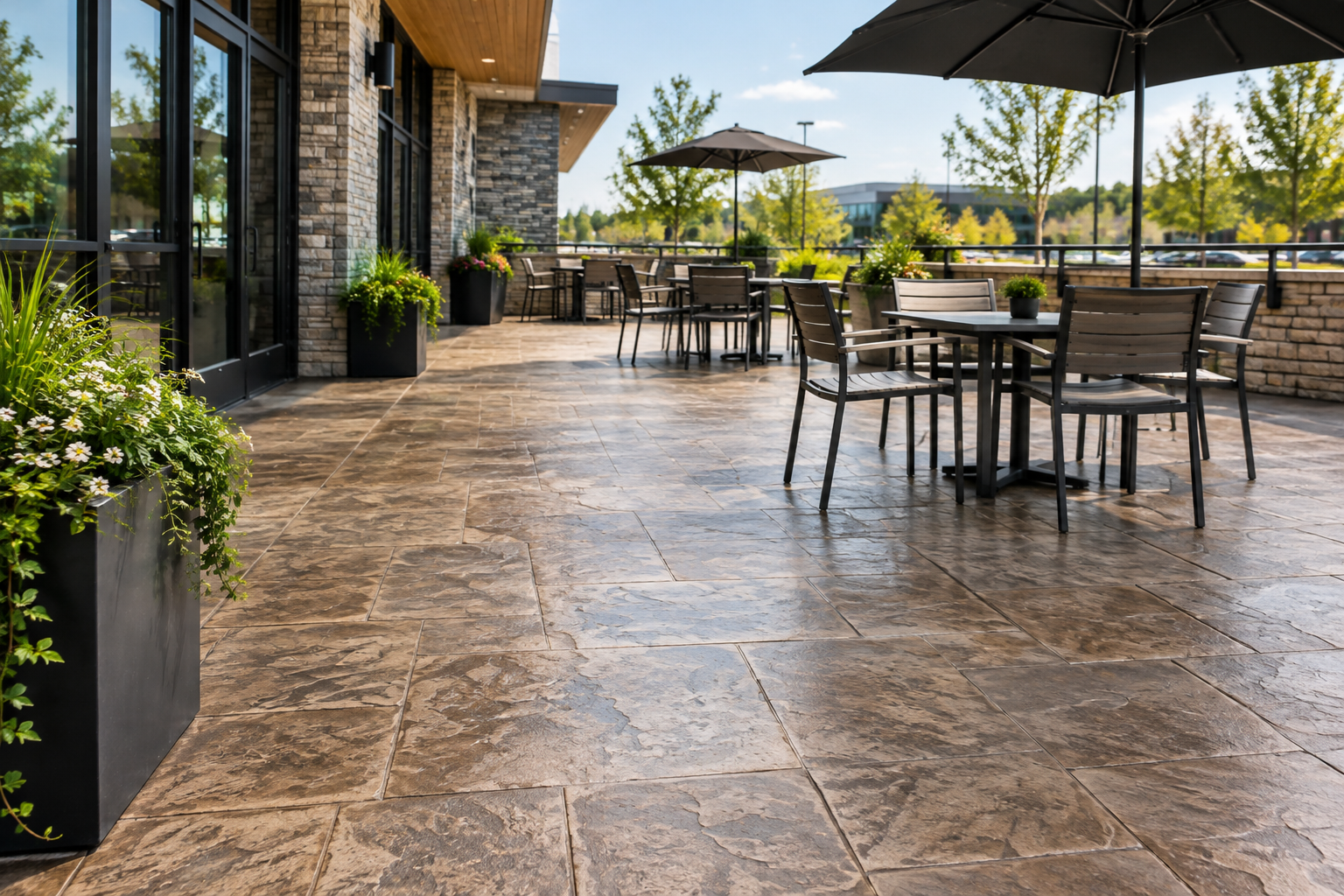
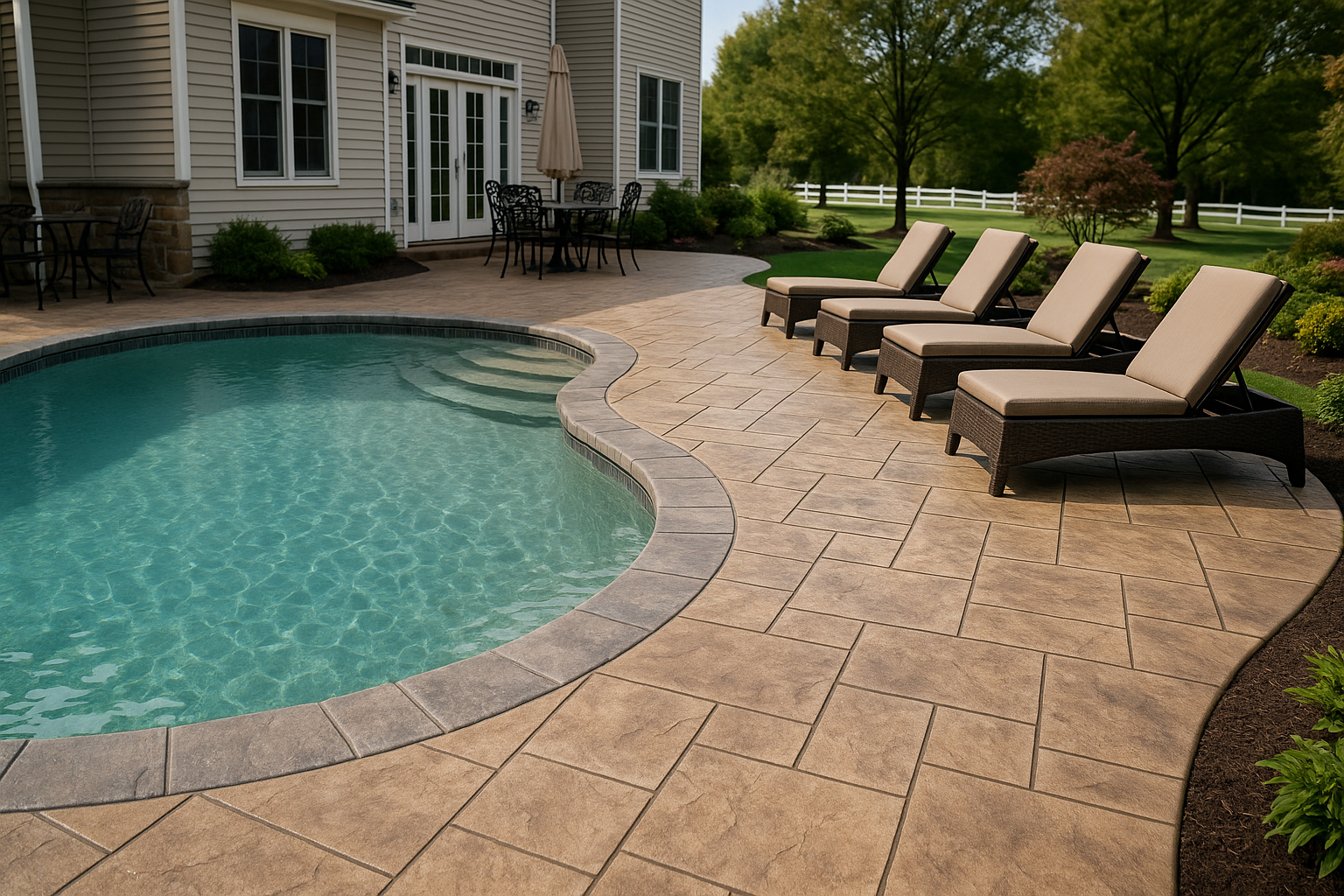
A commercial patio takes abuse that a backyard slab never sees: chair legs dragged across it a hundred times a day, delivery dollies, salt in February, and grease from an outdoor grill station. Stamped concrete handles that workload while still looking like cut bluestone, weathered wood plank or cobblestone, which is why so many restaurants, breweries and office campuses choose it over pavers. The versatility of stamped concrete for commercial patios comes down to one thing: a single monolithic slab can be finished to look like almost any material, then engineered to carry far more weight than the material it imitates.
Below is what actually matters when you are speccing a stamped patio for a business property in Southeastern Pennsylvania, including the details most residential-focused articles skip.
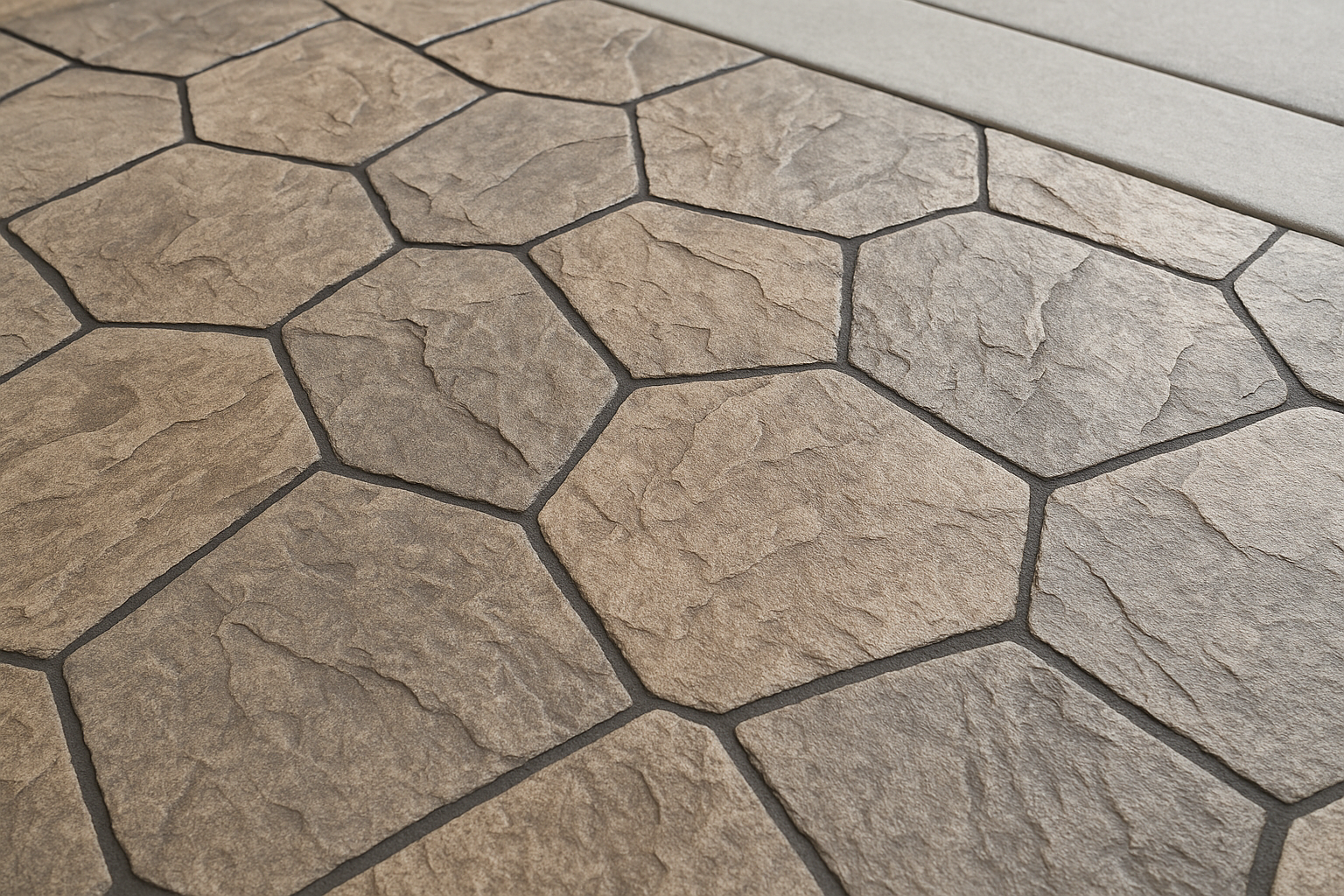
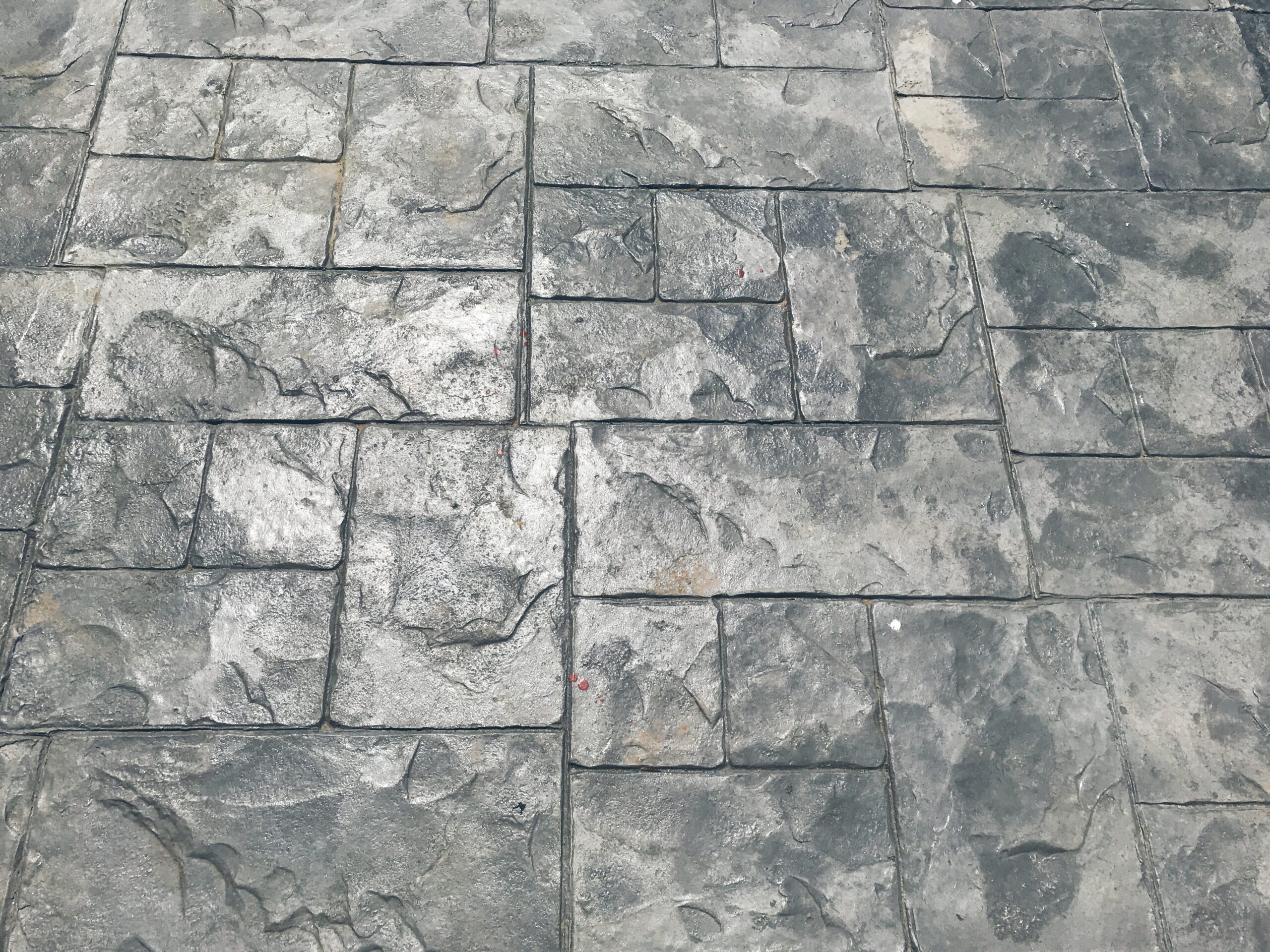
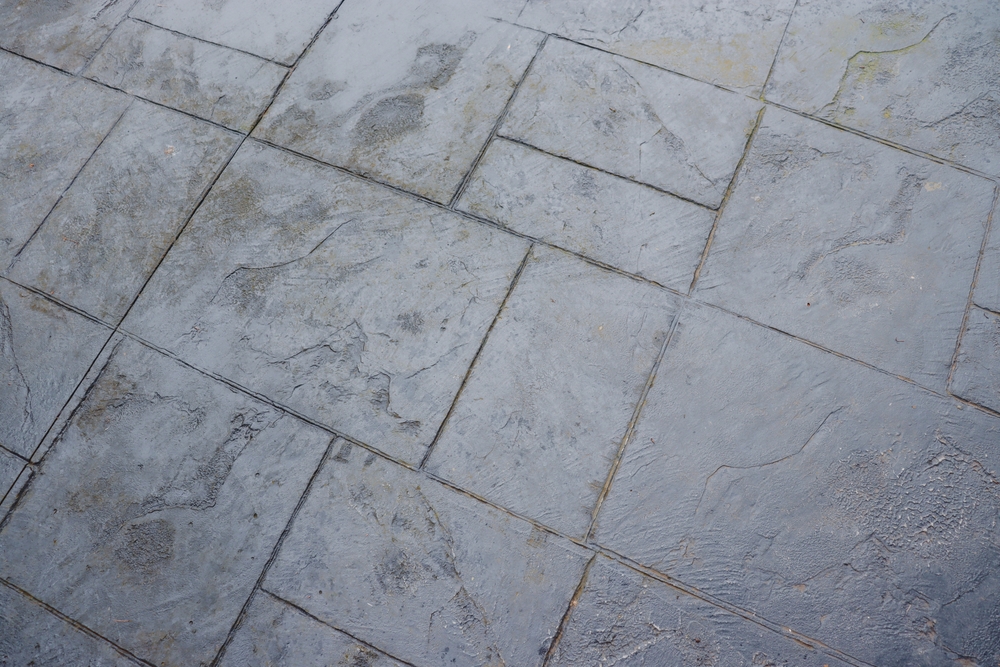
Stamped concrete is poured as a standard slab, then imprinted with flexible polyurethane mats while the surface is still plastic. Color comes from an integral pigment mixed into the truck, a dry-shake color hardener broadcast onto the fresh surface, or a release agent that leaves an antiquing shadow in the grout lines. Most commercial patios use two or three of those methods together so the finished surface does not read as a flat, uniform sheet of gray.
Common pattern families on commercial work include:
Borders are where stamped concrete separates itself from pavers on a budget. A contrasting soldier-course border, a saw-cut band or a broom-finished apron can define seating zones, fire pit areas and service paths without buying a second material. We use the same approach on residential projects too, as shown in our breakdown of stamped concrete walkways and the character they add out front.
A patio open to customers is a walking surface under the 2010 ADA Standards for Accessible Design, which call for surfaces that are firm, stable and slip resistant. Practically, that means a running slope no steeper than 1:20 along any accessible route and a cross slope capped at 1:48, which is roughly a quarter inch of drop per foot for drainage.
Texture depth matters more than pattern choice. Deep stone patterns can collect water in the grout lines, while very shallow smooth textures get slick once a glossy sealer goes on. The usual fix is a polymer or aluminum oxide grit additive mixed into the final sealer coat at roughly 4 to 8 ounces per gallon, which raises traction noticeably without changing the color.
Two more details that come up in inspections:
A typical backyard patio is 4 inches of 3,500 psi concrete on compacted soil. A commercial patio carrying crowds, heavy furniture, service carts and occasional light vehicle traffic should be built heavier, and skipping that step is the single most common reason a stamped patio cracks apart within five years.
On commercial pours in Montgomery and Bucks counties, we generally spec:
Done that way, a stamped slab routinely serves 25 to 30 years with periodic resealing. The surface color may need a refresh before the structure does.
Freeze-thaw cycling is the real enemy here, not foot traffic. Air-entrained concrete gives the water somewhere to expand, but the surface still needs a film-forming sealer to keep chlorides out of the top layer. Most commercial stamped patios get a solvent-based acrylic at 20 to 30 percent solids, applied in two thin coats rather than one heavy one.
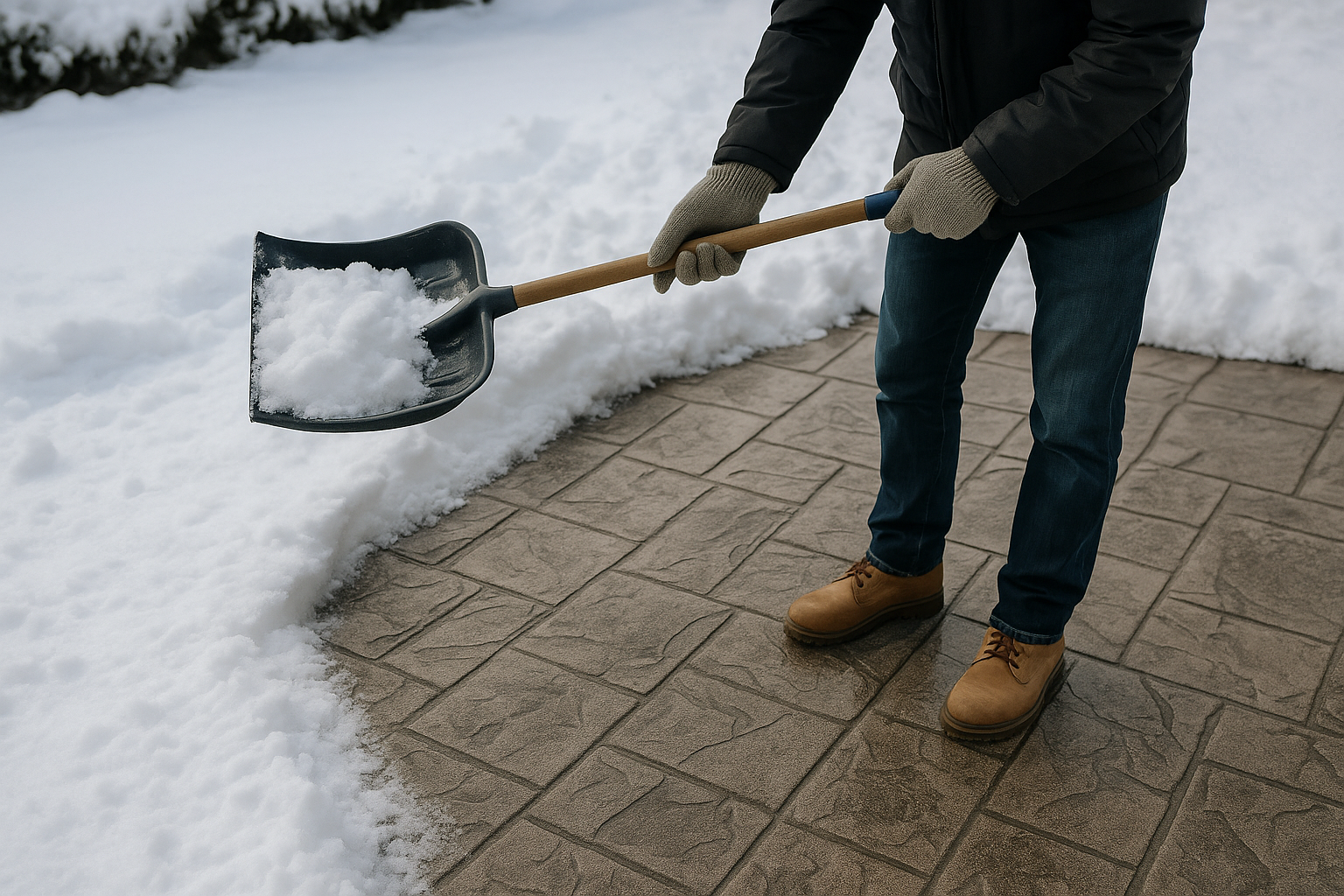
Rock salt is survivable on a well-sealed, properly air-entrained slab. Calcium chloride and magnesium chloride are harder on the surface, and ammonium-based melters should never touch concrete because they attack the cement paste directly. Sand with a light salt blend is the safer winter routine for customer-facing outdoor surfaces.
Expect to reseal a commercial patio every 18 to 24 months, compared with 2 to 3 years on a residential slab. Businesses in Souderton, Skippack and Lansdale that host winter events on the patio often land on the shorter end of that range.
Installed pricing in our service area generally runs in these ranges, assuming a buildable site with reasonable access:
Those numbers shift with demolition, drainage work, footing requirements and site access. The long-run math usually favors stamped work on commercial jobs because there are no joints to re-sand and no individual units to re-level after a frost heave. Our stamped concrete installation in Montgomeryville and nearby boroughs covers both residential and commercial scopes at these ranges.
Closing a patio in June costs a restaurant real revenue, so phasing matters as much as the finish. A patio can be split into two or three pour sections with construction joints placed where the pattern naturally breaks, keeping part of the seating area open while the rest cures.
A realistic timeline for a 900-square-foot commercial patio looks like this:
Concrete reaches most of its design strength at 28 days, so heavy equipment and delivery routes should stay off until then. If the patio is part of a larger project, the sequencing questions are similar to those we cover in commercial restaurant remodels and front-of-house design.
The benefits of a durable stamped slab disappear fast without a basic routine. Most property managers can handle all of this with in-house staff except the resealing.
Done consistently, the curb appeal of stamped concrete patios holds up for decades, and a storefront property with matching patios and walkways photographs better for menus, listings and online reviews.
Stamped concrete is poured concrete that has been colored and imprinted with textured mats while still wet, producing a surface that mimics stone, brick, slate or wood plank. The imprint is usually a quarter to a half inch deep, and the color comes from integral pigment, a dry-shake hardener, or a release agent that darkens the joint lines.
An unsealed stamped slab typically loses noticeable color within 2 to 4 years and absorbs water, salt and oil directly into the surface. The color hardener and antiquing fade first, then freeze-thaw cycling can start popping small flakes off the top layer, a condition called scaling. Sealing also makes cleaning far easier, since spills sit on the film instead of soaking in.
Yes, at roughly 1,500 to 2,500 psi with a 25 to 40 degree fan tip held 10 to 12 inches off the surface. Higher pressure or a zero-degree tip will cut into the sealer and etch the cement paste in the grout lines. Plan to reseal afterward if the wash removes gloss, and keep the wand moving rather than dwelling in one spot.
A properly installed stamped overlay lasts about 8 to 15 years, compared with 25 to 30 years for a full-depth stamped slab. Overlays are typically a quarter to three-quarters of an inch of polymer-modified cement bonded to a sound existing slab, so their lifespan depends heavily on the condition of the concrete underneath. If the base slab has active cracks or settlement, an overlay will telegraph those problems within a few seasons.
Wolfpack Home Services designs and pours stamped patios for restaurants, retail centers and office properties across Montgomery and Bucks counties, including stamped concrete work in Souderton and stamped concrete in Skippack. Send us your square footage, pattern ideas and target opening date, and we will put together a slab spec and price range built around your traffic, not a generic residential template.
From patios to footers, I’m here to handle your concrete needs right.
