October 5, 2026

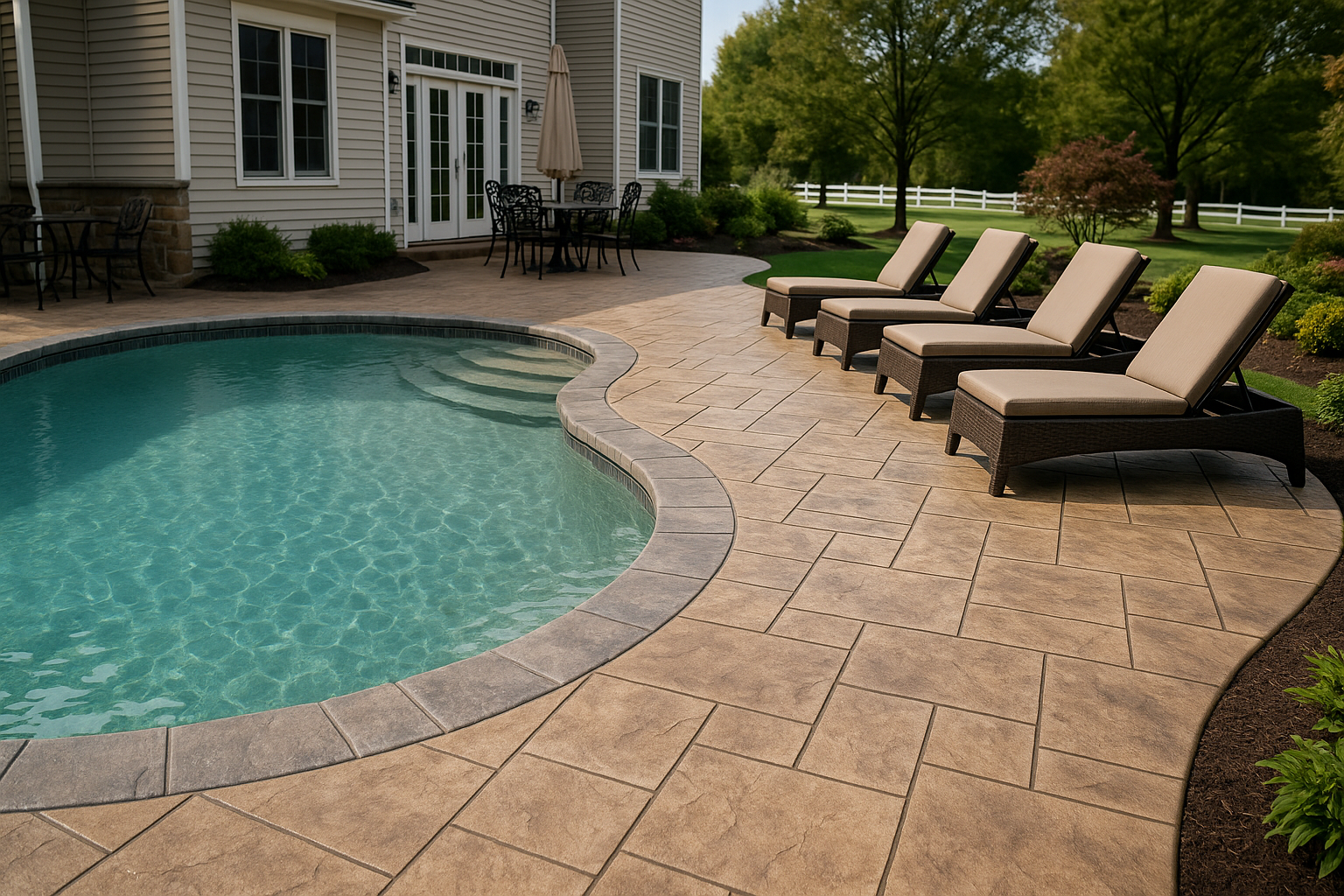
Stamped concrete pool decks are still the most requested surround we install around Upper Makefield, PA properties, and the 2026 versions look nothing like the orange-tinted ashlar slate everyone poured in 2006. Homeowners in Washington Crossing (18977) and the Newtown-side 18940 ZIP are asking for softer, lighter colors, larger-format patterns and surfaces that stay cool enough to walk on in August. Below is what is actually trending, plus the freeze-thaw and slip-resistance details that decide whether your deck still looks good in year twelve.
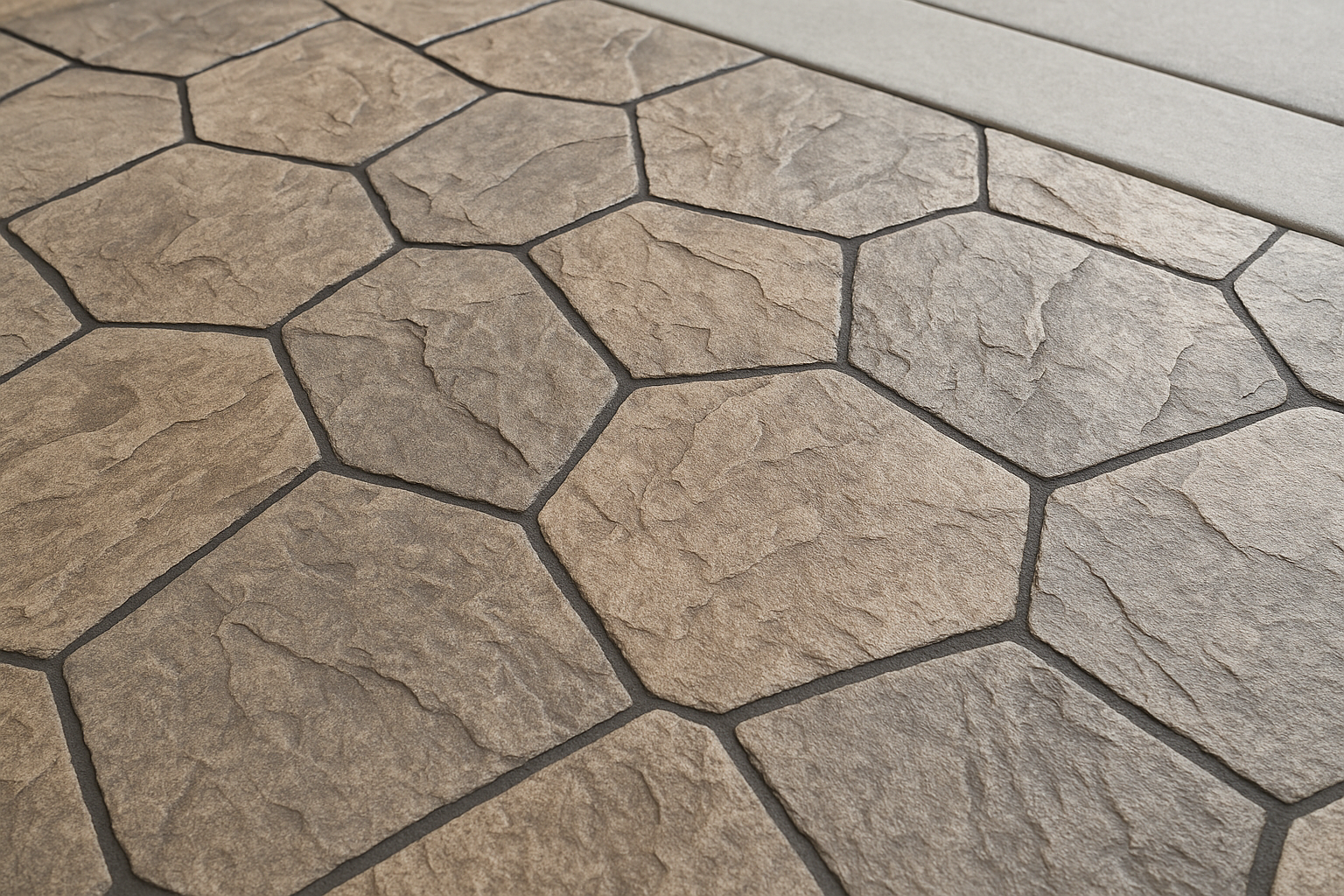
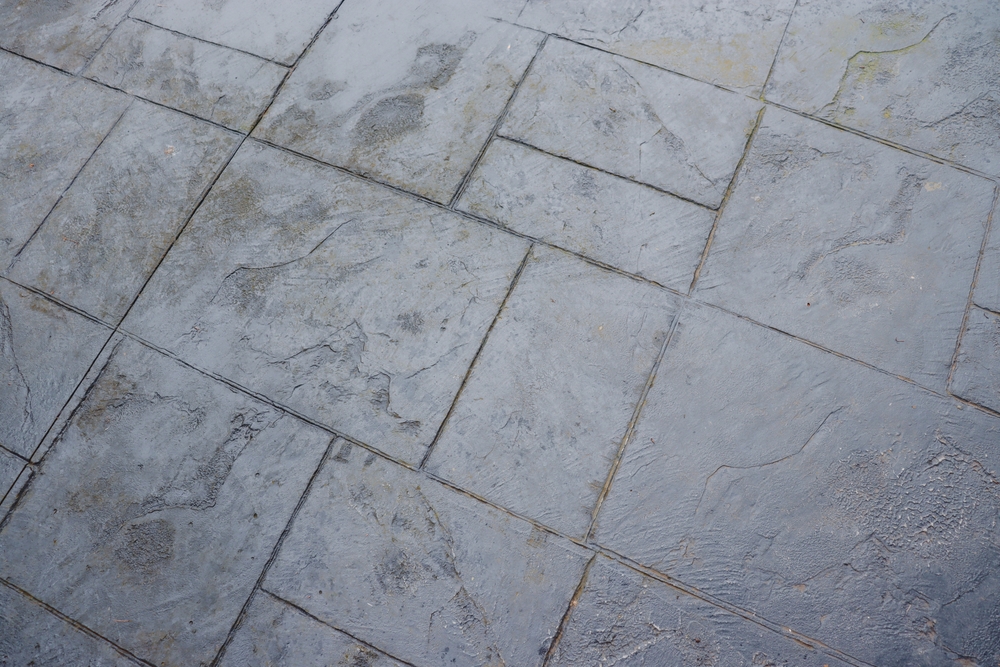
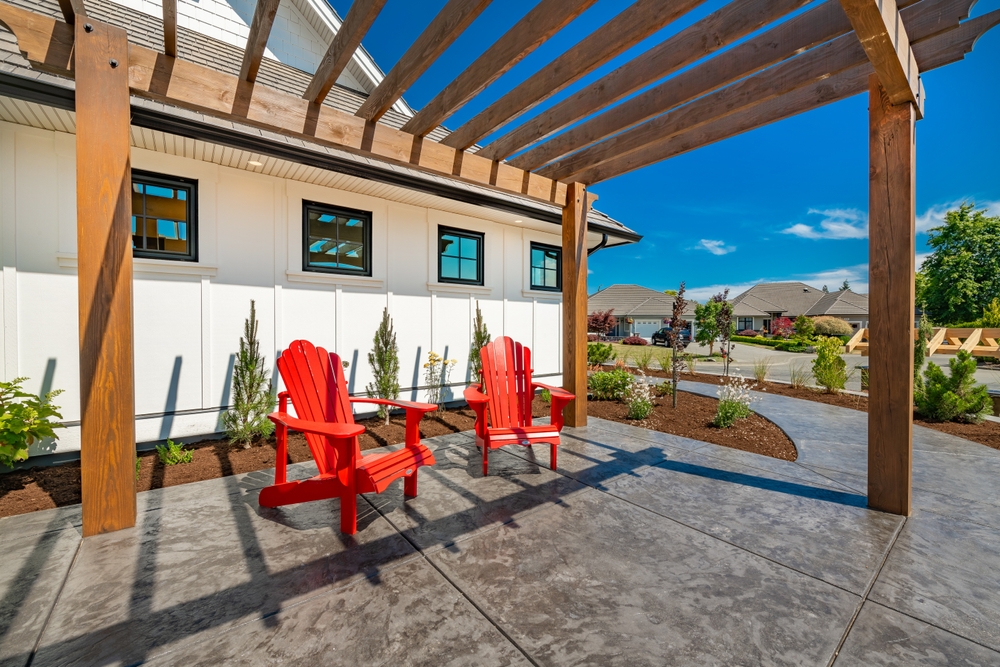
Most of the pool projects we quote along Eagle Road, Taylorsville Road and the lanes off Jericho Mountain lean toward quiet, natural stone looks rather than heavy pattern work. The design conversation has shifted from “what stamp do you have?” to “how will this feel underfoot in July?”
The other shift is scale. Five years ago a 500 square foot surround was typical; now we are pouring 800 to 1,200 square feet because the deck doubles as a dining and lounge area.
A monolithic slab has no joints for weeds, no individual units to shift, and no sand base to wash out when the pool overflows after a storm. That matters on properties near the Delaware River floodplain where saturated soils are a regular event.
Stamped concrete also lets us pour a continuous surface that wraps steps, coping returns and equipment pads in one placement. Compared to a paver surround, there are far fewer edges to settle. If you are weighing the two, our breakdown of stamped concrete versus pavers for a Bucks County patio covers the cost and repair tradeoffs in detail.
This is where most of the pretty pool deck ideas online stop short. Southeastern Pennsylvania averages roughly 40 to 60 freeze-thaw cycles a year, and a pool deck is wet more often than any other slab on your property.
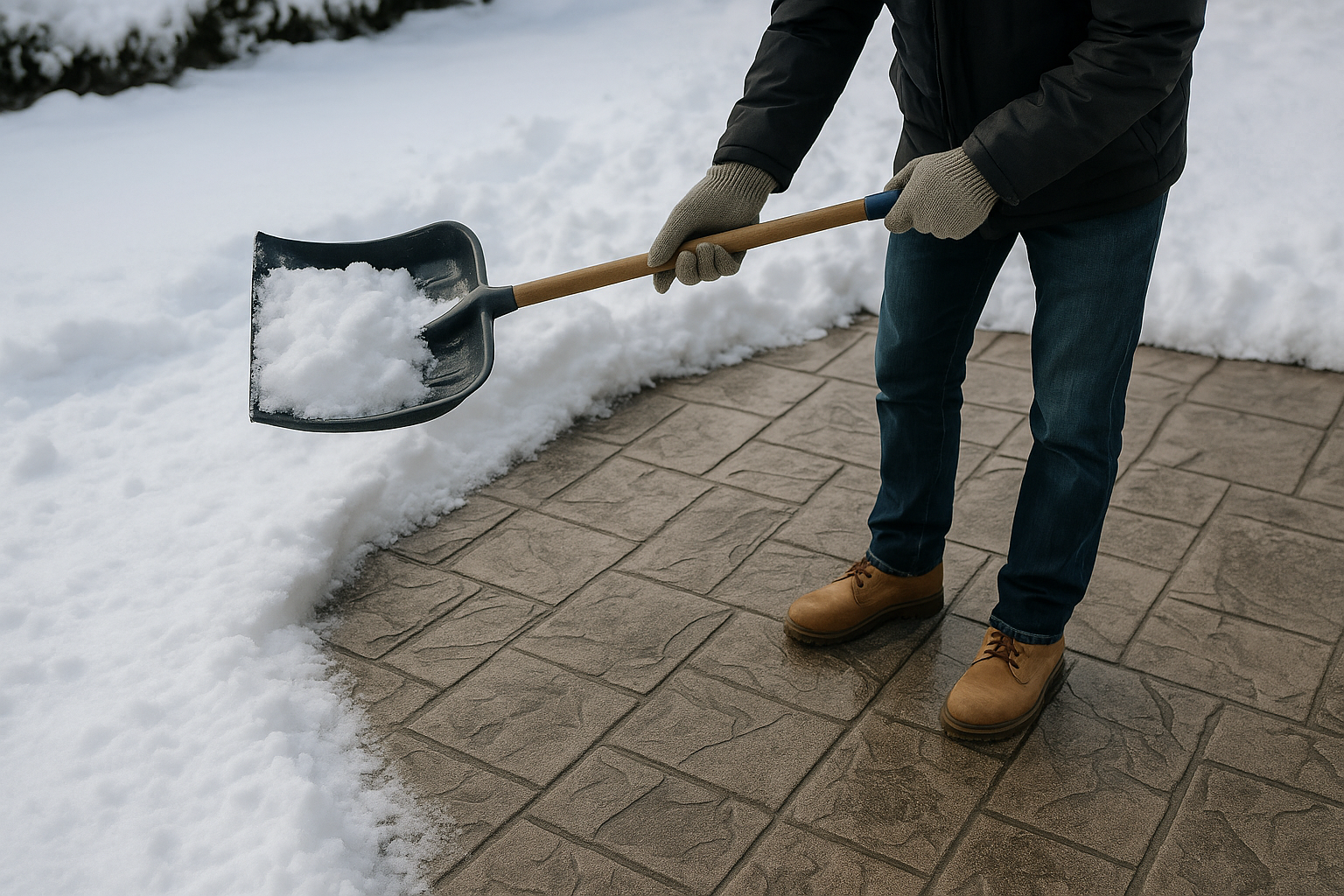
One rule we repeat every winter: never use rock salt or calcium chloride deicers on a stamped pool deck, especially in the first full year. Sand or a light traction grit is the safe choice.
Surface temperature is the single most under-discussed part of choosing colors for a concrete pool deck. A dark charcoal slab in direct sun can hit 130 to 150 degrees on a 90 degree afternoon, while a light gray or sand-toned deck typically runs 15 to 25 degrees cooler.
That is why the best colors around a pool are light-to-medium neutrals: bone, pearl gray, French gray, buff and soft tan, with darker antiquing used only in the release layer and joint lines. Reserve deep browns and near-blacks for borders, coping bands and accents where bare feet spend less time.
If your existing deck is sound but the color is dated, a stamped overlay can change the entire look without demolition. We explain the buildup and minimum depths in our guide on how thick a stamped concrete overlay should be.
Related reading: Do I Need a Permit to Build a Deck in Perkasie?.
For a closer look at this topic, see our guide: Custom Home Builds: Finding the Perfect Lot in Warrington.
Related reading: The Latest Trends in Quartz and Granite Countertops.
Related reading: Why Stamped Concrete Driveways are Gaining Popularity in Chalfont.
Related reading: Luxury Master Bath Trends Taking Over Lower Makefield.
Related reading: Designing a Chef’s Kitchen for Your Langhorne Home.
Homeowners often ask whether a broom finish is safer than a stamp. In practice, a properly textured stamp with a slip additive in the sealer performs comparably to a light broom finish, and it holds traction better because the texture is molded into the slab rather than dragged across the surface.
What actually causes slick pool decks is sealer, not stamping. Two things fix that:
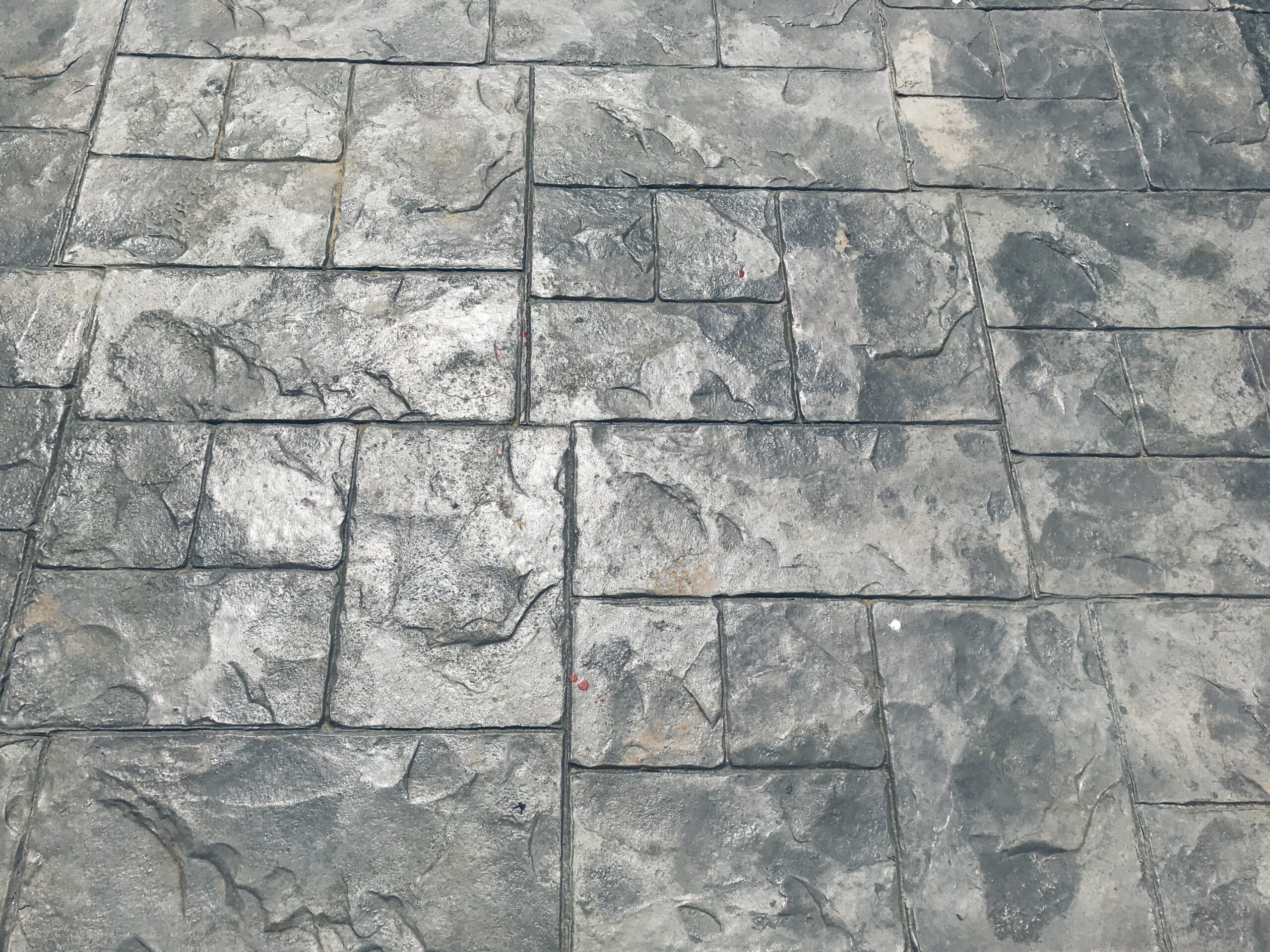
Skip deep, sharply chiseled patterns in the primary walking zone. Textured slate and smooth skins give traction without shredding feet. The U.S. Consumer Product Safety Commission also recommends keeping the deck surface non-slip and free of standing water as part of basic pool safety.
Upper Makefield Township enforces impervious surface coverage limits, and a large pool deck counts toward that total along with the pool, driveway and house footprint. On the larger lots common in the township this rarely becomes a hard stop, but it does need to appear on your permit drawings before we pour.
We grade pool surrounds at roughly 1/8 to 1/4 inch per foot away from the water, and on lots with a slope toward the house we add a trench drain or channel drain tied into daylight. Well water is common here, so if your fill line runs iron-heavy, plan on a stain-resistant sealer and periodic treatment to keep orange staining off a light-colored deck.
Saltwater chlorination systems are now on a majority of the new pools we work around, and salt is hard on unsealed concrete. Salt crystals grow inside surface pores and pop the top layer, which shows up first at the splash-out zones near the steps.
Our approach on saltwater installations is a penetrating silane-siloxane primer followed by a solvent or water-based acrylic topcoat with grit. Expect to reseal every 2 to 3 years; decks under mature oak and maple canopy, which describes a lot of Upper Makefield, may need it closer to every 2 years because tannin staining accelerates.
In Bucks County for 2026, most stamped concrete pool decks land between $16 and $28 per square foot installed, depending on pattern complexity, color count, demolition and site access. A typical 800 square foot surround therefore runs roughly $13,000 to $22,000.
Tight backyard access, which is common on wooded lots off Wrightstown Road, can add a few hundred dollars in buggy or pump costs. Those are typical ranges, not quotes; every site walk changes something.
The main pros are cost (roughly 20 to 35 percent less than natural stone), a joint-free surface that resists weeds and shifting, and near-unlimited pattern and color options. The cons are that it can crack with ground movement, requires resealing every 2 to 3 years, and repairs are harder to color-match than replacing a single paver.
Light-to-medium neutrals perform best: pearl gray, French gray, buff, sand and bone, which run 15 to 25 degrees cooler than dark tones in direct sun. Use charcoal or dark brown only as a release color or border accent so the surface stays comfortable for bare feet.
The biggest downside is cracking, since even a correctly jointed slab can develop hairline cracks as soils move through 40-plus Pennsylvania freeze-thaw cycles each year. Sealing every 2 to 3 years and avoiding salt deicers dramatically reduces surface scaling and discoloration.
Most Bucks County projects run $16 to $28 per square foot installed in 2026, so an 800 square foot deck typically totals $13,000 to $22,000. Overlays on sound existing concrete are cheaper at $10 to $17 per square foot, while demolition of an old deck adds $3 to $6 per square foot.
Both can meet slip-resistance needs, but stamped concrete with a grit-additive sealer usually holds traction longer because the texture is molded into the slab. Brushed finishes cost less, roughly $8 to $12 per square foot, and are a reasonable choice if appearance is secondary.
Wolfpack Home Services pours stamped concrete pool decks, patios and walkways across Bucks and Montgomery counties, including our service areas for stamped concrete in Souderton, Skippack and Montgomeryville. Send us your pool dimensions and a few photos of the yard, and we will walk the site, check grading and put a real number and pour schedule in front of you.
Let’s transform your backyard with a custom-built deck made to last.
