October 16, 2026
A cracked pipe boot costs about $200 to $400 to replace. Left alone for two or three seasons, that same leak soaks the decking, rots a rafter tail, stains drywall and turns into a $6,000 to $10,000 repair with mold remediation on top. That gap is the entire argument for regular roof inspections, and it is why a twice-yearly look at your roof is one of the cheapest insurance policies a homeowner can buy.
Most roofs do not fail dramatically. They fail slowly, in places you cannot see from the driveway, and the damage compounds quietly behind the ceiling.
Water does not stay where it enters. A nail hole or a lifted shingle lets moisture travel along the underside of the decking, sometimes six or eight feet from the actual entry point, before it finds a spot to drip.
By the time a brown ring shows up on a bedroom ceiling, the plywood above it has usually been wet through several freeze and thaw cycles. Replacing a sheet or two of decking during a repair adds a few hundred dollars. Replacing a whole section of sheathing, insulation and framing after three years of saturation runs into the thousands.
Here is roughly how the costs stack up in southeastern Pennsylvania as of 2026:
Skipping a $250 inspection to avoid spending money is how homeowners end up in the last two categories.
The National Roofing Contractors Association recommends inspecting a roof at least twice annually, in spring and fall, along with an extra look after any severe weather event. That cadence exists because the two seasons stress roofs in opposite ways.
Spring inspections catch what winter did: ice dam damage at the eaves, lifted shingles from wind, cracked sealant around penetrations. Fall inspections catch what summer did and clear the deck for the cold, which means gutters cleared, flashing resealed and loose shingles fastened before the first hard freeze.
Storm inspections matter more than people think. Hail that is only three quarters of an inch across can bruise asphalt shingles without breaking them, stripping the protective granules and shortening the roof’s life by years while looking completely normal from the ground.
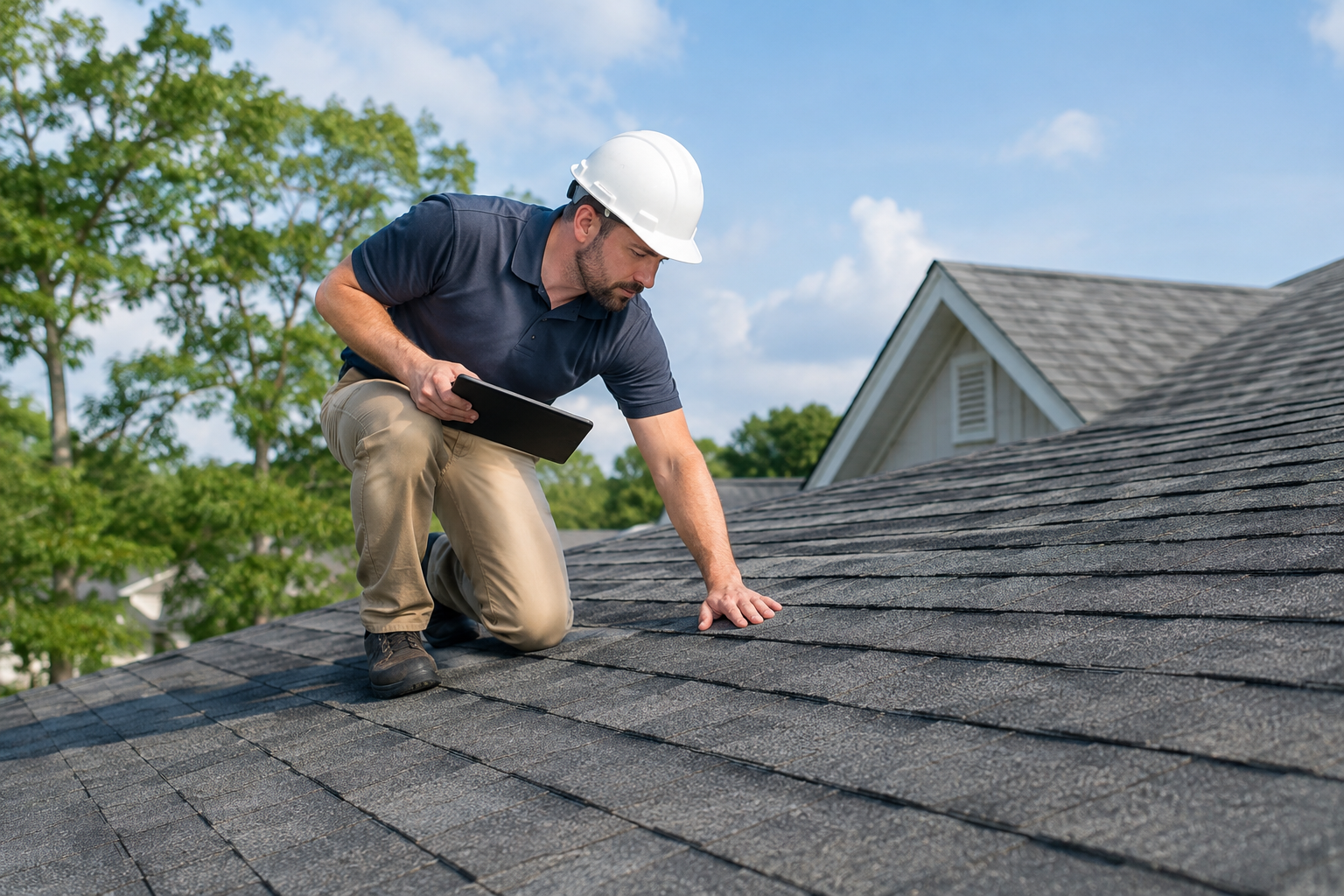
A real inspection is not a glance from a ladder. A thorough visit covers the roof surface, the penetrations, the drainage system and the attic, because the attic often tells the story before the shingles do.
That last item connects more than people expect. Overflowing gutters are a leading cause of wet basements, which is the same chain of failure covered in guidance on finishing and protecting basement ceilings, where moisture from above ruins the work below.
Montgomery and Bucks County roofs go through roughly 50 to 70 freeze-thaw cycles in a typical winter. Each cycle lets water seep into a hairline crack, expand about 9 percent as it freezes, and widen that crack a fraction of a millimeter.
Multiply that across a decade and you get split sealant, separated seams and shingles that have lost their tab adhesion. Ice dams compound it, backing water up under the first three or four courses of shingles where no amount of surface sealing helps.
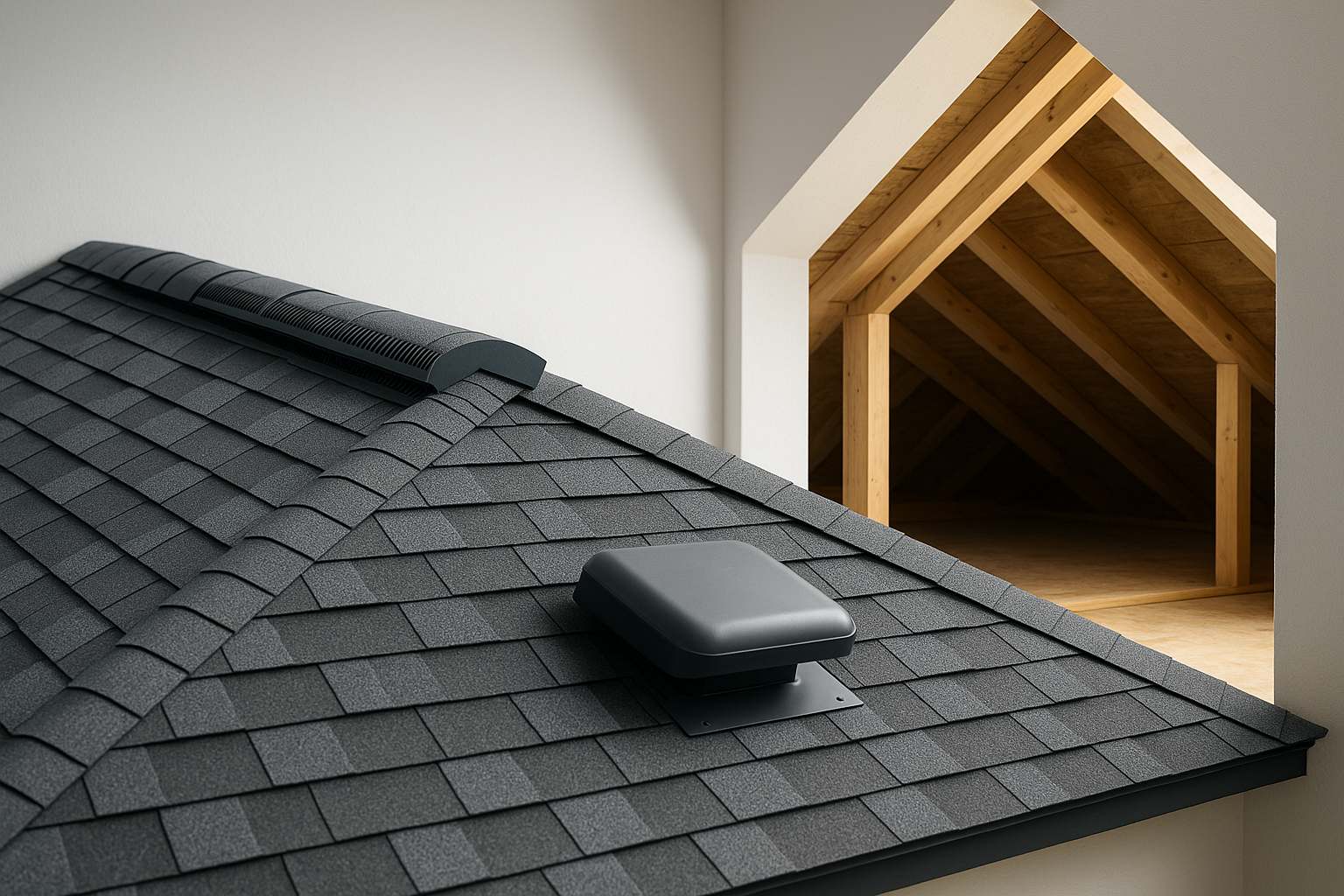
Homes with cathedral ceilings, older knob-and-tube era attics or poorly vented soffits are the usual victims. An inspector who checks ventilation can often fix the root cause with a few hundred dollars of baffles and ridge vent instead of a recurring ice dam repair every February.
Homeowners policies cover sudden, accidental damage. They do not cover deterioration, neglect or long-term leaking, and adjusters are trained to tell the difference by looking at rust patterns, rot depth and staining age.
If a claim gets denied, the reason is frequently worded as wear and tear or lack of maintenance. Dated inspection reports with photographs give you something concrete to push back with, showing the roof was sound before the storm.
Shingle manufacturers apply similar logic. Most limited lifetime warranties contain a maintenance clause, and a claim for premature granule loss or blistering goes nowhere if the roof was never inspected or if someone pressure washed it. The U.S. Department of Energy also notes that attic air leaks and poor ventilation drive both moisture problems and higher heating bills, which an inspection can catch at the same time.
An asphalt roof rated for 30 years rarely reaches 30 years without attention. Industry field data generally puts real-world service life at 18 to 25 years in this climate, and the roofs that reach the top of that range are the ones that got small problems fixed early.
Three or four maintenance visits across a roof’s life, at a couple hundred dollars each, routinely buy five extra years. On a $20,000 replacement, five years of deferral is worth roughly $4,000 in avoided cost, before accounting for the interior damage you never had to repair.
For flat and low-slope sections, inspections also open a cheaper option. A sound membrane that is simply aging can often be restored with a professional roof coating for a fraction of a tear-off, but only if the deck underneath is still dry. Wait two years and that choice disappears.
You do not need to climb anything to spot the early warning signs. A pair of binoculars and a walk around the perimeter catches a surprising amount.
Walking the roof yourself is a different matter. Falls from ladders and roofs send tens of thousands of people to emergency rooms each year, and wet or aging asphalt gets slick with no warning, so leave the surface work to crews with harnesses and the right boots.
If siding, gutters or exterior paint are on the calendar, schedule the roof inspection first. The flashing where the roof meets a wall is installed in a specific order, and discovering a problem after new siding goes up means pulling courses back off.
The same sequencing logic applies to curb appeal projects. Homeowners weighing siding colors and resale value usually want the roof color and condition settled first, since the two read as a single visual package to buyers and appraisers.
Most residential roof inspections run $150 to $400, and many local contractors perform a basic visual inspection at no charge when they provide a repair or replacement estimate. Drone or infrared moisture scans cost more, typically $300 to $600, and are worth it on larger or low-slope roofs.
Twice a year is the standard recommendation, once in spring and once in fall, plus after any hailstorm or wind event above roughly 50 mph. Roofs older than 15 years, or homes with heavy tree cover, benefit from the fall visit being paired with a gutter clearing.
Yes, and it is common. Water frequently soaks into attic insulation or runs down a rafter and into a wall cavity for one to three years before it saturates enough drywall to show, which is why attic checks catch problems that ceiling inspections miss.
No. Standard homeowners policies cover sudden damage such as wind, hail or a fallen limb, while deterioration, rot and long-term leaks are excluded as maintenance issues. Many insurers also reduce payouts on roofs over 15 years old by switching from replacement cost to actual cash value.
A documented roof inspection shortens negotiation on one of the most contested items in a home sale, where buyers commonly ask for $5,000 to $15,000 in credits over an unknown roof. Showing a dated report with photos and any completed repairs removes the guesswork.
Wolfpack Home Services inspects, repairs and replaces roofs across Montgomery and Bucks County, including Perkasie and Souderton, with written findings and photos you can keep on file for insurance. Call to get on the schedule for a spring or fall inspection, or to have a storm-damage assessment done while the evidence is still fresh.
From kitchens to roofs, I manage projects that transform your home.
